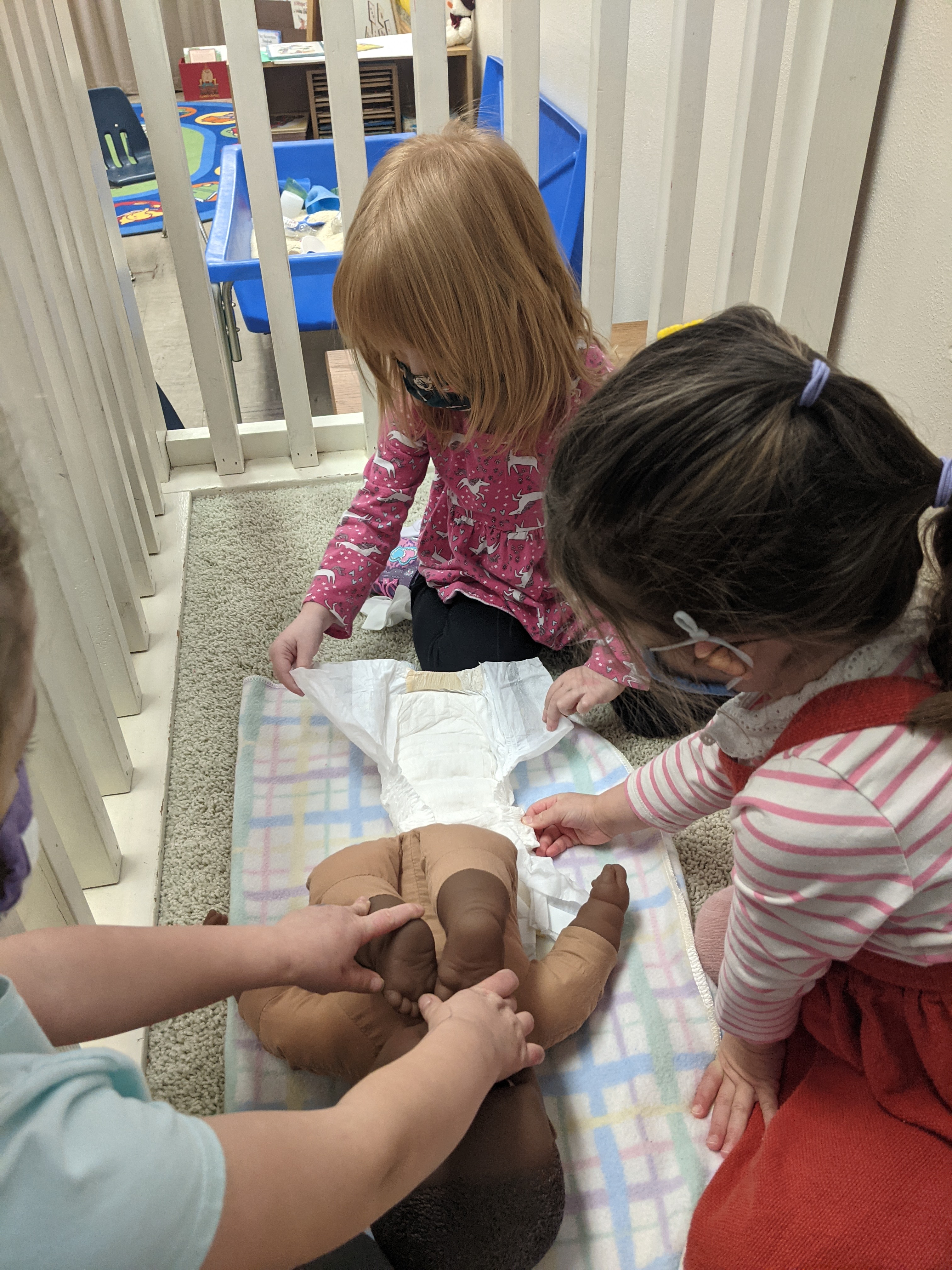
Infant Toddler Program Spotlight

By Sheila G. Kelley, Development Coordinator, Harvey County United Way

Raising a child in today’s world is a challenge on the very best of days. Childhood vaccinations, dental and optical health, haircuts, dietary obstacles, growth and weight guidelines – just a few of the many things parents deal with their children.

Getting all those activities done provides a strong base for children to start school. But what if you notice your little one seems to be having a bit of trouble crawling or walking; not using words; not transitioning from bottle to table food or throwing tantrums?

In steps the Harvey County Infant Toddler Services group. When a family brings forward a concern in development, the team – consisting of two early childhood teachers, a speech language pathologist, a physical therapist and an occupational therapist – moves into action.
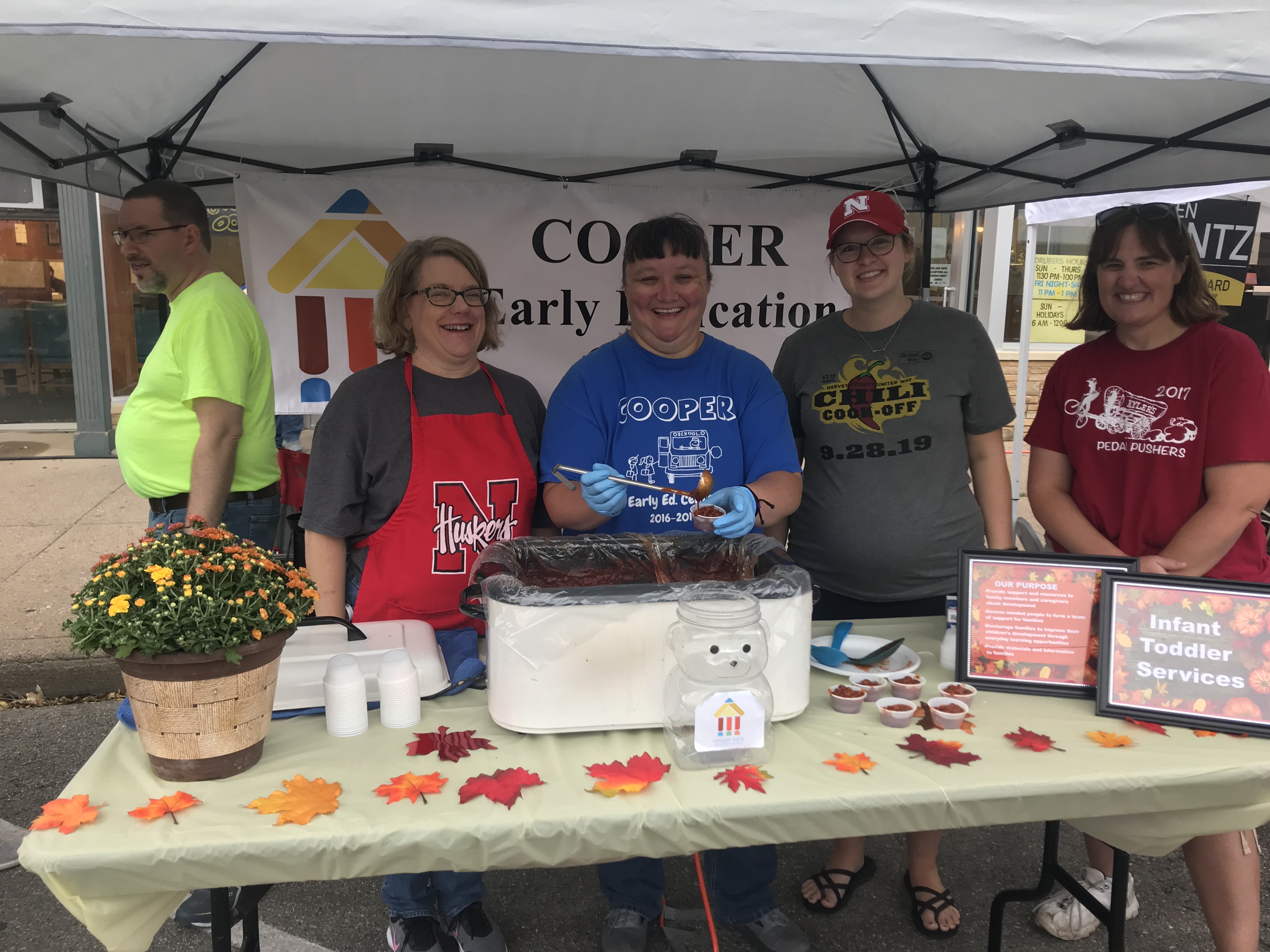
Infant Toddler Program at the 13th Annual Chili Cook-Off.

“Our area of specialty is early childhood special education,” said director Jonni Brown of herself and  fellow early childhood teacher Ashley Snodgrass. “Then the whole team focuses on development of the child and family. We focus on a child’s learning, play and thinking skills.”

The program is free for children birth to three years old. The team uses the primary provider model in their work with families. That means all early interventionist team members work closely with the family to conduct the assessment and design the child’s plan.

However, each family will thereafter see a primary person who will support the family in the daily routines and activities that are important to them. Research backs up the primary provider model, saying if a family has one person to connect with, results are easier and longer lasting.

“We believe building a relationship with one person on our team will provide the family better support,” Jonni said. “The primary provider will bring in other team members as needed.”

Assessments, program development and services are given at the family’s home, where infants and toddlers learn best through everyday experiences with familiar people in familiar places.

“We look at the whole family, not just the development of the child. What resources do the family’s need to be successful?” Jonni said. For instance, is there safe housing, a parent with a driver’s license, a mom who wants to get a degree or go to college?

Being part of the process and planning empowers them to know they can make those choices for their kid,” Jonni said. After the assessment and plan are completed, primary providers start seeing kids weekly to once a month, just depending on age, severity, family’s needs and their abilities to do what they need to do to be successful.

Since the majority of meetings are held in the child’s home, they involve a lot of drive time and travel expenses to make sure all children in the outlying areas of the county are served. Because grant funding from Harvey County United Way isn’t restricted to a certain category such as supplies, capital improvements or program support, the Infant Toddler program is able to supplement the dollars they receive from the state for travel for all the home visits.

With around a hundred children in the program, there is a lot of travel involved. Not all those kids are on a plan at the same time because there are children who transition off or kids that move. Average active cases at any given time are close to 70.

Jonni has been with the program for 18 years, coordinator for the past three years. She has seen an increase in the number of referrals coming in. But with only five staff, of which three are part time, it weighs heavily on them.

“We are trying to see our current case load and we get the new referrals. How do we balance all that?” she said. With continued support from Harvey County United Way, they are able to support families in all areas of the county.

“If the staff demonstrates a need to get more employees, we feel like maybe we are in a good position to ask for another part-time person,” Jonni said.
Heart to Heart Spotlight

By Sheila G. Kelley, Development Coordinator

“Our first primary goal is to help the victim that has been abused but we recognize that kind of trauma effects everybody,” said executive director Veronica Mosqueda-Bargdill. Heart to Heart, located in downtown Newton, is a child advocacy center where the staff and small group of professionals serve child victims of abuse and their non-offending parent.

“We tell the parents that it’s <the abuse> a ripple effect and you’re going to experience every kind of emotion and it affects everybody different,” she said.

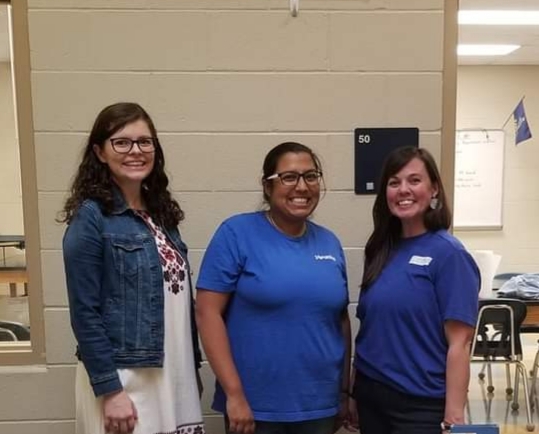
Heart to Heart staff

Heart to Heart Child Advocacy Center staff works with other area agencies to meet physical, mental, and emotional needs of children. According to their website, www.hearttoheart.com, their core mission is to help children who have suffered abuse to heal and improve their community’s ability to stop child abuse. They also provide resources for child abuse prevention.

A multi-disciplinary team meets monthly in each county they serve and consists of the county attorney, law enforcement, Department of Children and Families, mental health and medical. They also have school counselors and social workers available to provide further assistance.

“We know that just because they come here, the trauma doesn’t stop affecting them and we know it can affect any aspect of their life so it’s nice to have all these people together,” Veronica said.  “We’re there from the moment they come in here to the time their case is completed, whether it be through the court system or not.”

Once a family is referred to HTH, the child goes through a forensics interview to get as much information on the alleged act of abuse. While the evaluation team is gathering information from the interview, another HTH staff will visit with family members in the outer reception area.

“I’ll talk to the family about setting up resources such as medical, making sure they have their medical needs met and connecting them with trauma-informed therapists in our area,” said Dayna Steinmetz, Newton family advocate.

The reason for the forensic interview is to build a case against the alleged offender – what happened, timelines, any information that will help bring charges to the case. Grants from Harvey County United Way provides funding to purchase necessary equipment and other items used to make the encounter the best it can be in such circumstances.

“We make sure that we’re all working together, that we’re not pushing the child, that the child seems comfortable the whole time,” Veronica said.  “I tell them, I promise the majority of the time, their child doesn’t realize they’re having a conversation. They just think they are talking.”

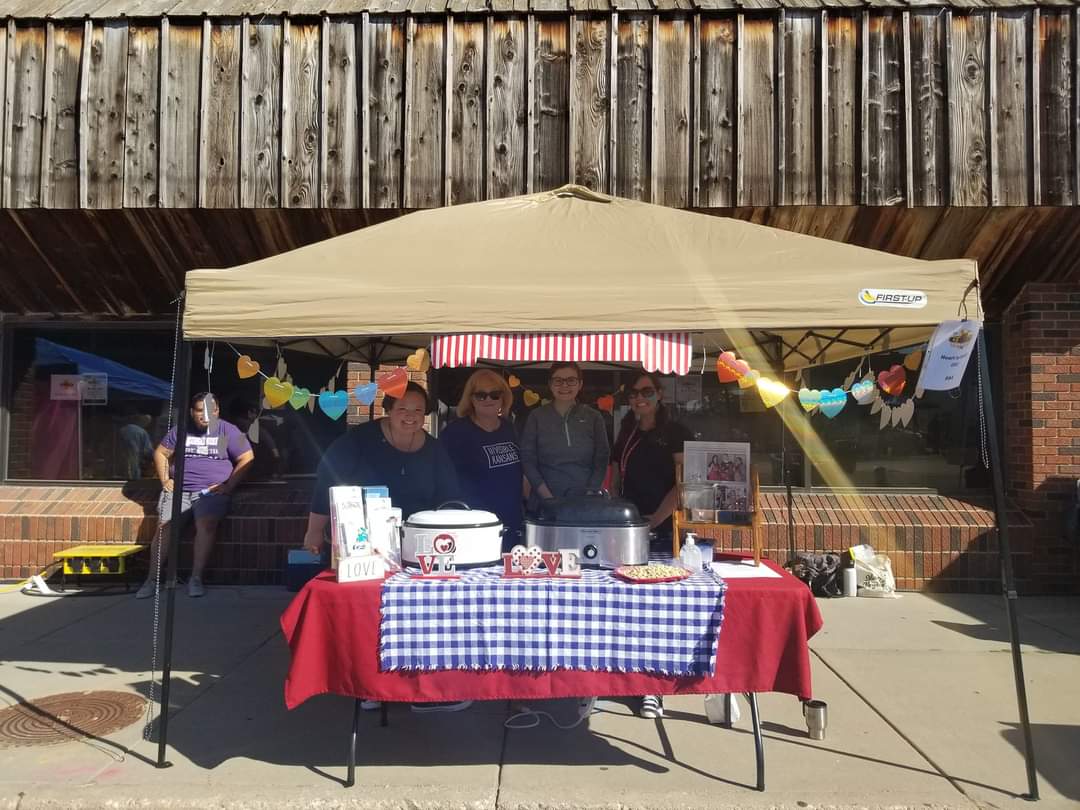
Heart to Heart participating in HCUW’s annual Chili Cook-Off event.

Veronica stated that the agencies can only do the forensic interview once. The whole system is set up so the child doesn’t have to do it again.

“We go in knowing we have one shot to interview this child. That’s why it started in the first place. There was a kid and they ended up being interview 12 times over the course of all this. It retraumatizes a child, the victimization affects the child over and over,” she said.

“The grants from HCUW have been instrumental in our being able to keep up with the latest technology to make the entire process easier for not only the children and their families, but also the agencies involved to make a successful case against the <alleged> abuser,” she said.

Community Playschool Spotlight

By Sheila G. Kelley, Development Coordinator

Bright colors, clusters of small chairs and tables, and big printed letters and numbers are strong indicators that you’ve stepped back in time to when you were small and going to preschool meant everything. Unfortunately, sometimes families aren’t able to find or fund preschool for their children, especially those younger than the county’s Head Start age requirements.

But with grant funding from the Harvey County United Way, the Community Playschool preschool has been able to sustain itself through difficult times and continue to provide quality, creative preschool opportunities for children 2 ½ to 5 years of age.

Jeannette Leary, Playschool co-director, said HCUW funding has made it possible for the program to offer sliding scale tuition fees to those families that might not be able to afford other preschools.

She appreciates that HCUW doesn’t place restrictions on how the funding must be used as does many other grants.  Besides tuition relief, partial funds have been used to supplement salaries of the director.

Jeannette, along with co-director Kasey Newell, supervises the twice-weekly program along with volunteer teachers and classroom aides. With the pandemic, class sizes have been noticeably smaller than in the past.

“At one time, we had 60 children enrolled. There was quite a drop off during 2020 due to the pandemic but our numbers are steadily growing again,” stated Jeanette. Currently there are 20 children split into two classes of 10 each.

Classes are held 9-11 a.m. Tuesdays and Thursdays and follow public school closure procedures. Mennonite Church on the Bethel College campus provides classroom space along with a large meeting room and director office space at no cost to the program.

Harvey County United Way has funded the preschool for nearly 26 years. “Without those funds, there would definitely be a <financial> gap” they’d have to overcome.  “United Way helps us sustain our organization,” Jeanette said.

You can find out more about Community Playschool by visiting them online.