By Sheila G. Kelley, Development Coordinator
Circle of Hope, a program of Harvey County’s Peace Connections, connects community volunteers with families ready and willing to begin their journey towards financial stability.
“What makes COH, I think, incredibly unique is it focuses on building social capital with families that are living with very few resources,” said Jennifer Rose, Peace Connections co-director and program director. “It’s an opportunity for the families to dream.”
Jennifer added, “In the process of building social capital and healthy relationships, the intention is to build stability in their lives – financially, emotional, physically, housing, whatever it might be.”

Many families in Harvey County live in financial poverty. The idea of a future other than what they know, doesn’t exist.
“So a big part of that class is slowing down, kind of dreaming in that kind of abstract world about ‘what would my life be like if I had enough money, if I had managed it differently, if I had an education’,” Jennifer said.
That class is called Getting Ahead, a 15-week course that focuses on financial management, budgeting, resource building.
Peace Connections has been in Harvey County since the early 1980’s. It began as the Newton Area Peace Center. Over the years, the group has been involved in a variety of projects from soup kitchens to establishing Newton’s recycling program and starting the giving garden that still exists, which supplies food to the Salvation Army for distribution.
Circles of Hope started in 2009 as the first of its kind in Kansas. Initial attendance was about 15-20 people at most, meeting at a church fellowship hall that made the space available.
“Today we still meet, going on 12 years now, with weekly meetings, meals and childcare,” Jennifer explained. “With COVID, the numbers had gone down a bit but pre-COVID, we were probably serving 70-80 meals a week.”
Now attendance is between 50-65 people. The weekly event is held every Tuesday at the First United Methodist Church in Newton which has a great kitchen to use, a nice fellowship hall and a nursery for the kids.
“We have different programs, different themes depending on the night,” Jennifer said. “And we have people who have been coming since that first class who still come because it’s a community for them, a family.”
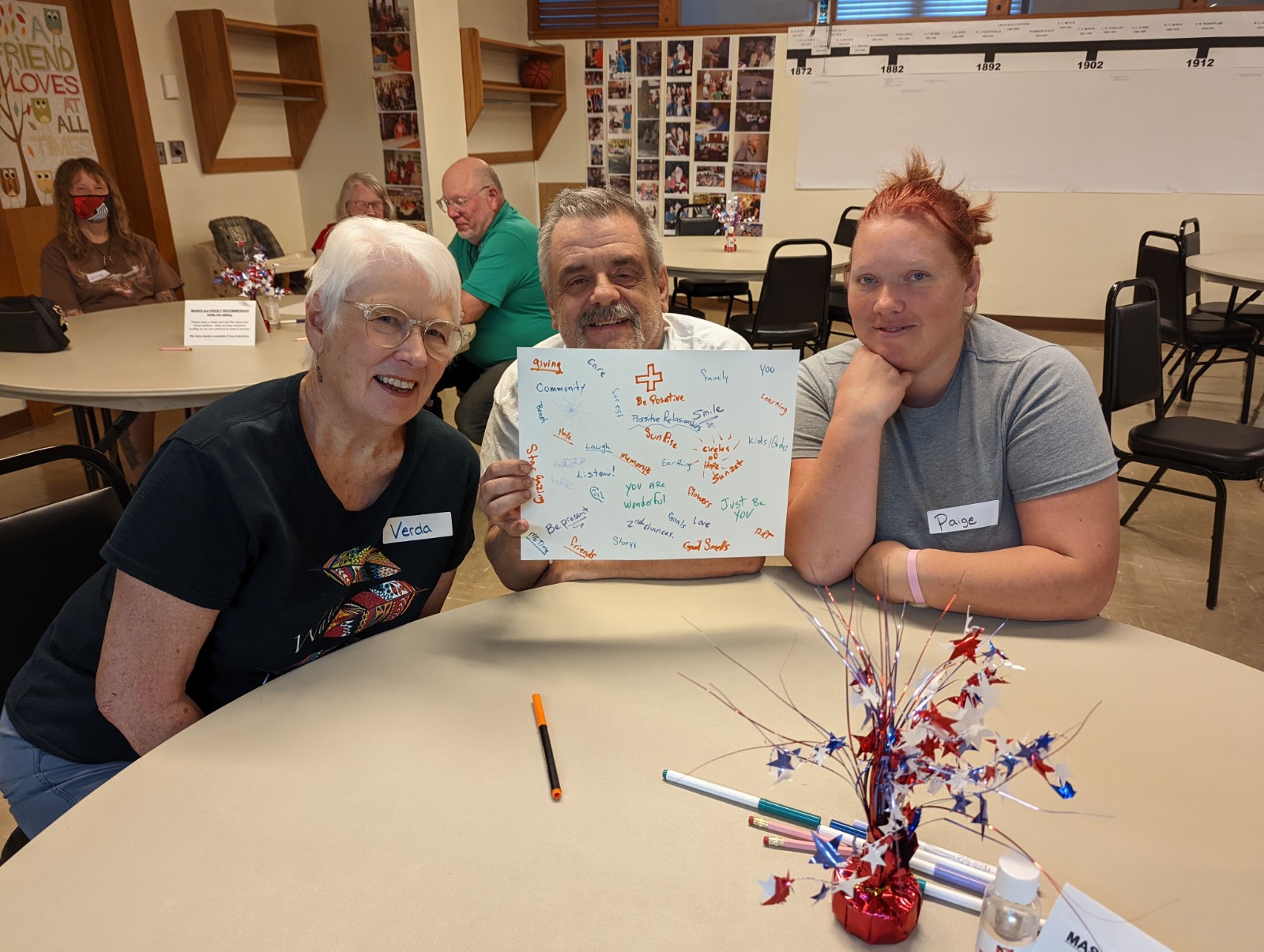
Participants come, share a meal and connect with each other. Any food left over at the end of the night gets packaged up and sent home with the families.
“We just graduated a class in December. We had eight people start and eight people graduated,” Jennifer said with a smile. “And of those eight, one of them moved but the other seven said they wanted to be matched.”
Being “matched” with “allies” – two for each graduate – provides intentional friendship for the graduate and their family. Volunteer Allies can offer a new perspective, community connections, and a listening ear.
Allies are all volunteers and Jennifer said they are always looking for volunteers: childcare, kitchen help for meals, etc.
“We have very good volunteer retention. Many of them have been matched four or five times,” said Jennifer. “I mean, these are 18 month matches so most of them make the full 18. We’ve had allies who’ve been around since the beginning.”
Examples of successes from the program are easy to see.
“We’ve had people that, when they first came, they would not speak to anybody at the table and now they get up in front of the group and give presentations,” Jennifer said. “I’m proud of that. That’s what we want to see.”
In fact, they just hired a new childcare coordinator who was one who had been through the class.
“When we asked her why she was interested in the position, the very first thing she said was, ‘it’s the opportunity to give back to a program that gave so much to me’,” Jennifer said.
Jennifer, who has been with Peace Connections since 2013 as an intern, assumed the director position in 2014. In 2019, she welcomed Kendra Davila who is now co-director. They are the only two full-time staff with the assistance of four part-time staff who coordinate volunteers for the kitchen and childcare, as well as a class facilitator.
“What I really appreciate about the HCUW funding is that helps pay part of our salaries which other grants don’t always allow,” she said. “Our program is large and, although we do depend on our many dedicated volunteers, we have to have staff for oversight.”
Another financial challenge has been finding funds to cover the ever-rising food costs. HCUW funding helps here too.
“Since COVID, we’ve had to pay more of the food costs,” Jennifer said. “That’s probably doubled at least over the past year or two.”
Peace Connections also facilitates their other focus area – SEAK – a no-cost, family-friendly program of Summer Enrichment Activities for Kids.
 The United Way